February 22, 2008

The ORV lawsuit or Why Derb Carter will win - He is right


When I saw the reports that the Southern Environmental Law Center (SELC) had filed for an injunction to limit beach driving in the Cape Hatteras National Seashore (Virginian Pilot) (Island Free Press)I was non-plussed. I knew that the National Park Service (NPS) had started a cooperative process to develop rules for Off Road Vehicle (ORV) use in the park. The suit would make that process much more difficult, if not impossible. The suit seems to preempt the process and sends the signal that the environmental groups negotiating the new rules will go outside the system to get their way. Think about how you would feel if you entered a negotiation in good faith, as the ORV groups have done, then your rivals went to court to change the status quo, while still claiming they want to negotiate in good faith. It doesn't build trust. It will make the job much harder.
I noted that the suit cited Dare County, Hyde County and an ORV group as co-defendants. That made me curious so I decided to read the brief and see what was being requested. The SELC website has a lot of info of the issue, includeing their filing in Federal District Court.
Before I start let's get some things straight; I am not lawyer even though I may have played on TV (and on this blog). I do understand some fundamental truths.
  • Any governmental rule needs to promote a public policy and promote it in a considered fashion
  • The more your rule is tied to the public policy it is intended to promote the safer it is from challenge.
  • Promoting private (read economic) interests only works in the absence of an opposing adopted public policy.
  • Lawyers (good ones) don't make their opponents case for them.
Given those truths, the SELC brief makes a very compelling case for limiting beach driving in several sensitive sectors of the seashore. The suit doesn't ask for a final ruling, it asks for changes in the NPS regulations until a final resolution is found in the ORV issue., in legal terms a preliminary injunction. That changes the issues that need to be considered in a decision significantly and it changes them in favor of the environment.
A preliminary injunction is intended to freeze the playing field until a decision is made, to keep one party from committing further harm while the case is adjudicated. In this context the SELC maintains the existing ORV rules don't provide the federally mandated level of protection of endangered and protected species in the park. They assert that the court needs to act to provide better protection until the final rules are hammered out. The suit asserts that the current rules violate federal law, don't promote adopted federal policy and the only recourse to achieve the federally mandated goals is to stop beach driving in several sensitive sections of the seashore. Here is the kicker:The SELC makes an excellent case for an injunction. and I think they will get one.
They base much of their case on recommendations from scientists the NPS hired to recommend strategies to meet the federal guidelines for recreational use of National Parks. That report offered several levels of protection:
The USGS Management Protocols for each species or group of species includes three alternative protocols, providing respectively for a “Highest Degree of Protection,” “Moderate Protection,” and “Minimum Protection” from the adverse effects of ORV use in the Seashore, particularly during the critical breeding season.

The SELC claims the interim ORV policies adopted by the NPS don't even rise to the level of "Minimum Protection". The SELC injunction requests closures they suggest would meet the "Moderate Protection" standard. This would restrict beach driving around Oregon, Hatteras and Ocracoke Inlets and Cape Point. All popular areas for ORV use. The SELC bases their case on the NPS's own science and a lot of federal case law. The standards for injunction are pretty clear, if the current situation will lead to irreparable losses by the plaintiff they win, if the status quo is stable then an injunction is not needed. The SELC makes a strong case, using NPS data, that the current rules won't stop the damage to shore bird habitat.
The Endangered Species Act makes the SELC case even stronger. They maintain case law on environmental issues recognizes that environmental damage is hard to fix and should be mitigated if possible until final rule making is complete. These precedents argue for securing sensitive areas until a final plan is adopted to make sure that no more damage is done.
Perhaps the strongest case for an injunction revolves around the Endangered Species Act. The courts, including the Supreme Court have ruled that this federal policy overrules most any interest up to and until a final judicial or administrative decision. Here is the language in the brief:
The second preliminary injunction standard that is relevant here is the standard applied to claims brought under the Endangered Species Act. When a preliminary injunction is sought for violations of the Endangered Species Act, “the standard is different” be cause “the third and fourth prongs of the injunction analysis” – the analysis of the balance of harms and public interest – “have been foreclosed by Congress.” Fla. Key Deer v. Brown, 386 F. Supp. 2d 1281, 1284 (S.D. Fla. 2005). When considering a preliminary injunction for violations of the ESA, “(1) the Court does not have the ‘traditional equitable discretion’ to balance the parties’ interests, (2) any threatened harm is per se irreparable harm, and (3) the public interest always favors the imposition of an injunction under the Act.” Loggerhead Turtle v. Volusia County, 896 F. Supp. 1170, 1178 (M.D. Fla. 1995) (emphasis in original) (citing Tenn. Valley Auth. v. Hill, 437 U.S. 153, 174, 184 (1978)). According to the Supreme Court, “Congress has spoken in the plainest of words, making it abundantly clear that the balance has been struck in favor of affording endangered species the highest of priorities . . . .” Tenn. Valley Auth. 437 U.S. at 194. Consequently, the preliminary injunction standard for ESA claims has two parts. Parties “seeking a preliminary injunction under the Act must show: (1) that the wildlife at issue is protected under the Endangered Species Act, and (2) that there is a reasonable likelihood that defendant will commit future violations of the Endangered Species Act.” Loggerhead Turtle 896 F. Supp. at 1180.
The brief goes on to demonstrate that there are piping plovers (an endangered species) in the park and that the NPS has not adopted ORV rules that were mandated in 1972. That would seem to meet the tests described in the standard. In short expect the SELC to get their injunction.
I expect the SELC will win because the NPS has not done what it should have done over 30 years ago, aopted rules on beach driving. Nags Head adopted a permit system with limited access over 25 years ago, not because of environmental concerns but because cars on the beach just don't play well with a lot of other uses. Nags Head (and other towns) made decisions about how much impact from ORV's they would accept. They held hearings, did studies and then adopted rules. It was hard, beach driving remains an contentious issue in Nags Head but there are rules, rules that promote a variety of public policies in a rationally demonstrable fashion. If the NPS had anything reasonably approaching that standard this lawsuit would not prevail. Unless the NPS can prove that their existing rules, not the rules they may adopt, will enforce federal law they will lose. Frankly I don't see how they can make that claim.
As I noted earlier, lawyers don't make their opponents case. The SELC kids make a strong case and tried to close very loop hole. When I get to see the NPS brief I will judge how well they respond, but the argument that federally mandated environmental policy trumps local econcomic interests makes judicial sense to me.
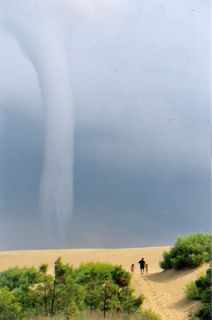
I don't suggest that the impacts on the ORV community are not real and may seem harsh. I just bought an SUV. The photo at the top of this post is my vehicle on the beach in Ocracoke last summer. I have enjoyed sunset at Ocracoke Inlet many times. It is a special place at a special time. I understand that fishing at Cape Point is the piscatorial equivalent of climbing Everest. I know that many people who vacation on Hatteras Island want to drive on the beach. I know those things but I also know that our government has found that we need to protect species from extinction regardless of the impact on the affected communities. The SELC makes a compelling case that a limited closing will provide ample opportunity for access while providing a level of protection for wildlife that the NPS' own scientist say is necessary to meet federal environmental rules.
Those rules caused a great outcry when they stopped the use of DDT, we now have the brown pelican back as a result. Those rules cause a great outcry when the stopped all fishing for striped bass, Rock fish have now recovered and provide part of the impetus for beach driving. Strong action to protect threatened and endangered species has a history of success. Success that has enhanced the same economies that protested the rules to begin with. In short people can adapt more easily that animals can. Therefore we should. That is the thrust of the federal rules and that is why SELC stands an excellent chance of getting their injunction.
I have a bad habit of burying the lead, of taking the main point and hiding it amidst a lot of other stuff, and I guess I have done it again.
The really sad thing about this is that ORV use and shore bird habitat don't have to conflict. Cars can avoid habitats if they want to. But there is a small portion of the ORV user population that just doesn't get it, that has to drive where they they will have the worst impact. They are not a large part of the user group but their impact far outweighs their numbers. When Judge Boyle ruled ORV use illegal in the seashore he noted 47 violations of areas closed for bird nesting and 23 violations of turtle nesting areas in the summer of 2006. When ORV users willfully violate protected areas they make it difficult for anyone to defend them. Had the ORV community abided by the moderate (even modest) NPS rules, they would not be in danger of losing significant access now.
The combination of the willful disregard of federal mandates by the NPS and the limited rules by a few ORV users has created a situation that appears to guarantee judicial action to limit access to the beach. Meanwhile the lawsuit will make the rulemaking process much harder. No one likes to be sued or to see a rival gain an advantage outside the process when you felt your were negotiating in good faith.
I can only hope that the ORV groups and the local governments involved in both the suit and the negotiations will look beyond the injunction and try to find a solution that meets both the federally mandated protection of endangered species, protection that has a history of success, and allows as much access to recreational areas as possible. The best answer may be for for the user groups (or our local governments) to get invovled in the protection of the environmentally sensitive areas in return for access to economically important areas. If the NPS is limited by budget constraints and that is the controlling factor then lets find a way to get it done. That may not sit well with the environmental groups who may think they have the stronger hand but unless they want to fight a very long and very difficult battle they would be well advised to not overplay their advantage but to work hard to find a solution that the ORV groups can embrace. That is what has worked in the towns, the solution met the needs of the great majority of users, therefore it is supported and enforced by both sides. Both sides realizing that if they create a new controversy they might lose what they have now.
Ok, the lead is now at least six feet under. If you have read this far you are interested in the issue so go read the SELC brief. I expect you will find it enlightening. Judge for yourself the merits of the case then join me when we see what the courts decide.
Ciao
Note: The SELC website has links to several editorials and columns about their suit. If you want sense of public opinion beyond the coast have a look.

Labels: , , , , , , , , , , ,

March 17, 2008

ORV Why Derb Carter may not win Part IV

Ok, maybe just maybe there is a ray of hope in the battle to forestall an injunction banning ORV traffic at several locations within the Cape Hatteras National Seashore. (see note below for background links). Attorneys representing Dare and Hyde counties and several ORV groups (the intervenors) have filed a response to the Southern Environmental Law Center's (SELC) motion for a preliminary injunction banning beach driving from many of the most popular fishing spots in the CHNS. To my eye it is everything the NPS response was not. The Island Free Press again has an excellent article explaining the brief.
In their brief opposing the temporary injunction, the intervenors’ attorneys argue that:

• The interim process was the equivalent of the process for adopting long-range rulemaking on ORV use.

• The environmental groups will not suffer irreparable harm if no injunction is granted.

• The intervenors and defendants will suffer significant, immediate, and irreparable harm if an injunction is imposed.

• The environmental groups cannot show a likelihood of success on the merits of the request for the injunction

• The public interest favors leaving the interim plan in place until a longer term rule is devised by the negotiated rulemaking process.
The brief goes on to cite extensive legislative history about the role of recreation and beach driving in the park. It argues strongly that the requested injunction would have severe economic consequences and attempts to refute the claims of the SELC related to the Endangered Species act both on legal and scientific grounds. From the IFP again:
• The assumption that ORV use is the primary threat to seashore wildlife is a position not supported by the facts. Other factors affect the populations, including predation, climate, and other human activities, including pedestrians.
• The interim plan will adequately protect seashore wildlife until a long-term management plan is in effect. And, therefore, the environmental groups cannot show irreparable harm based on shortcomings in the interim plan.
• The intervenors would suffer “significant, immediate, and irreparable harm” from an injunction. The brief and supporting documents address the economic impact of closing the most popular areas for fishing and recreation and claim it is “far worse than the Plaintiffs assert.”
• Finally, the intervenors’ response addresses the public interest in leaving the interim plan in place until there is a final rule on ORV use.
• “Finally,” the response states, “it is in the public interest for this Court to refrain from issuing an injunction. First, the public has a strong, Congressionally recognized interest in open governmental processes and the ability to participate in decision-making that affects individuals’ daily lives….An injunction would trample this process.

Contrast this with the NPS response which says there is no plan (basically an admission of guilt) and make no attempt to refute the SELC claims.
The question now is will the NPS and the Department of Justice pick up on the legal work done by the intervenors. If that happens there is a chance that the judge will rule in favor of the NPS. Certainly the intervenors' brief gives him a solid legal framework for such an action. What is not clear is what happens if the NPS and DOJ don't pick up on the intervenors' lead. The Judge gave little weight to arguments from the intervenors' attorney at an initial hearing. In fact he was quite dismissive, asking why should he accept arguments from the outside parties if NPS, the primary defendant, wasn't making the same arguments.
Still the case for maintaining the status quo got a big boost and that is a good thing. What is needed now is pressure on the NPS to mount a defense. The best way to apply that pressure is for interested citizens to call their elected leaders and ask for them to contact NPS and DOJ and demand that they embrace the intervenors arguments and briefs. If enough pressure is put on in DC it could make a difference. If you are local here are the numbers:
Senator Elizabeth Dole (R- NC) 202-224-6342
Senator Richard Burr (R- NC) 202-224-3154
Representative Walter B. Jones, Jr. (R - 03) 202-225-3415
Do not email, they get thousands. A phone call is much better. Ask them to respond back to you when the action is taken.
If you are not in eastern NC try this link to get your contact information.
As I have stated in previous posts, I think the NPS leadership wants the preliminary injunction as a way to get them off the hook for severe ORV limits. That position won't change unless the Administration wants it to change. They won't want it to change unless Congress thinks it is important. Congress won't get involved unless they think the public is watching. If you want ORV access maintained or even if you want a fair negotiated rulemaking process you need to call now. Not tomorrow, not next week but right now. All the lawmakers say they support ORV access now they can prove it.
You can read the full text of the brief on the IFP website. Thanks again to them for providing very good timely coverage of this issue.

Ciao
Note: This post follows several other posts. For background you can read the following posts.
Judge Boyle rules ORV use illegal
Why Derb Carter will win (Part1) (Part 2) (Part 3.141...)
All of these posts and more on the issuce can be found this a Google search of the blog for the term ORV. Not all the search results are relevant but several have good background.
The blog Outer Banks Republic has also written about the issue as has Bill's Outer Banks Beach Life. I strongly recommend both these sites as regular reading. They have lots of good current info and (mostly) well reasoned opinion.

Labels: , , , , , , , ,

March 15, 2008

ORV Why Derb Carter will Win Part 3.14159265


Island Free Press ... reports that the NPS has filed its response to the Southern Environmental Law Center's (SELC) request for an injunction banning ORV use at Oregon, Hatteras and Ocracoke Inlets and at Cape Point. The NPS filing does nothing to challenge my initial take on this suit. The NPS states plainly that they have not adopted ORV rules. This means that SELC meets a major legal hurdle, the likelyhood they will prevail in their suit.
Federal Defendants do not dispute that, pursuant to 36 C.F.R. 4.10, the NPS regulation implementing Executive Orders 11644 and 11989, ORV use is unauthorized at the Seashore in the absence of a special regulation designating ORV routes and areas. See United States v. Matei,2:07-M-1075 (E.D.N.C. July 17, 2007); United States v. Worthington, 2008 WL 194386 (E.D.N.C. January 2, 2008). Accordingly,Federal Defendants do not dispute that Plaintiffs have met their burden of showing a likelihood of success on the merits [emphsis added] with respect to the alleged violation of 36 C.F.R. 4.10. On this basis, the Court could find Plaintiffs are entitled to a preliminary injunction, pending adjudication on the merits of Plaintiffs' remaining claims and on the scope of any appropriate, permanent injunctive relief. See The Scotts Co., 315 F.3d at 271.
The NPS response leads by challenging the legal tests the SELC proposes for the judge to use in considering the injunction. I am not qualified to parse which is more accurate but even using the NPS test its clear that it would be not hard to make a case that continued ORV use near endangered species nesting areas meets the test. Here is the standard the NPS
“‘(1) the likelihood of irreparable harm to the plaintiff[s] if the preliminary injunction is denied,(2) the likelihood of harm to the defendant[s] if the requested relief is granted, (3) the likelihood that the plaintiff[s] will succeed on the merits, and (4) the public interest.’”
The SELC brief makes strong assestions that ORV use is doing irreparable harm to endangered species. Their brief minimizes economic damage to the area and makes legal arguments against using an economic test when considering harm under the Endangered Species Act. The NPS has given them #3 and enforcing the ESA is clearly in the public interest, as are the mandated ORV limits that the NPS has failed to adopt for about 30 years. Game, Set, Match to the SELC et. al.
The NPS make no claims about the other parts of the standard other than to argue that the court need not find harm solely based on a violation of the Endangered Species Act. This type of legal wrangling can go either way depending on how the judge is leaning. We already have some sense of that from Judge Boyle's earlier rulings and the scheduling hearing. This guy is pissed and the SELC has given him a platform to do something about it.
What is not in the NPS brief is equally telling, no discussion of how the current plan protects endangered birds, very little refutation of the SELC assertions about what actions the ESA requires. The brief makes no arguments on the scope of the requested injunction either. It does not assert economic harm to the area nor defend ORV access under the legislative mandate of the Seashore. All this issues are raised in the SELC brief and the NPS has no answer. Not a good sign.
All this makes the response from lawyers for Dare and Hyde county critical. Judge Boyle had little use for this side of the case during the scheduling hearing. As one wag wrote "it sounded WWE Friday Night Smackdown on the "CW" Network!. " They have a big hurdle trying to make arguments that the NPS doesn't join. As Judge Boyle points out the decisions about the seashore are the purview of the NPS not local government.

The NPS response only strengthens my belief that the NPS management actually believe the ORV ban is the correct action under the ESA but they don't have the guts to do it on their own. By mounting a weak defense to the injunction the NPS will lose, Then they get the protection they want for plovers yet they don't have to defend the closure. They can simply say 'Hey, the judge did it not us'. Once the injunction is granted and the new standard is in place look for the rulemaking process to drag on. With their environmental goals met the NPS and the SELC and partners, have NO incentive to negotiate anything more than the access granted under the injunction. Why should they give up what Judge Boyle is about to give them? Absolutely no reason.
My advice to those who want access: Cut a deal right now before the injunction. You have all the leverage you are going to get, Your opponents know this. Don't surrender but sit down and accept some closures and very tight rules about how you access the beach. and make the call today. If you wait you are going to find yourself in a very very weak position with no way to level the playing field.
I don't expect anyone will take my advice. The injunction was part of a strategy to polarize the debate and make sure that no one wants to compromise. It has done its job. There will be no concessions and sometime in late April there will be no ORV access to the prime fishing locations in the CHNS. This does not please me but I don't see anything that can stop it, certainly there is nothing in the NPS filings that will help.
Ciao.
Note the Island Free Press remains the best online source for news on the issue. If you get the Coastland Times you can benefit from their excellent coverage but you can't get it online unless I get another gift from Mary Helen.

Labels: , , , , , , , ,

April 5, 2008

ORV: Has Derb Carter won Part 04/04/08

This morning brings reports from the hearing yesterday in Raleigh on the SELC suit over ORV use in the Cape Hatteras National Seashore Recreation Area. To catch up see note below. The Virginian Pilot has the story as does the Island Free Press (a great source on ths issue)
Attorneys for the SELC and the NPS reported that they are near a settlement of both the injunction request and the lawsuit the injunction stems from. Apparently the settlement would replace the interim rules on beach driving. Dare County and its intervenor partners have not been part of the negotiation process to this point, a development that doesn't bode well for ORV use. Needless to say the environmental groups are happy.
"We view the results of today’s hearing as very positive,” Rylander said, adding that the judge indicated that he was inclined to grant the preliminary injunction before he gave the parties more time to work on an agreement.
“We believe the settlement” Rylander said, “will provide protection for wildlife and provide for ORV access for much of the year.”

Bobby Outten, Dare County attorney, said it is the assumption of the intervenors that “we will be part of a settlement”

Judge Boyle, Outten said, indicated that he want “transparency” in the process and wants all groups with a stake in the outcome to be part of a settlement.

Outten said Boyle noted some “parameters” he wants to see covered in a settlement. Among them, Outten said, were consideration for the traditional, cultural, and historical uses of the beach, concern about the volume of traffic the beaches can sustain, and the idea that different areas of the beach may need different rules.

“He indicated that he realized the value of the Point,” Outten said. “He seems to respect the concerns of the access and recreational community and the legitimacy of user groups.”

“I think we are in a better position than we were yesterday,” said John Couch, president of the Outer Banks Preservation Association, who attended the Raleigh court session.

“The chips are on the table now,” he said. However, he added the position of strength clearly lies with the plaintiffs, the environmental groups. “They have the upper hand.”

Couch's comment is reflected in the Pilot report which recognizes Judge Boyle's familiarity with the area and the issue:
"With the courtroom filled with supporters of off-road vehicle access on the seashore, the judge said that the plaintiffs - the National Audubon Society and Defenders of Wildlife - have a 'compelling case'[emaphsis added] for closing the beaches before the bird nesting season starts.

Lora Taylor, an attorney with the U.S. Department of Justice, told Boyle that the proposed agreement would recognize the need to balance protection of the seashore's resources with the public's right to reasonable access."
Boyle's remarks about a "compelling case" has to be part of what motivated the NPS to move towards settlement but I also expect that pressure from the locals and the ORV groups may have forced their hand as well. The NPS seemed poised to simply give in. Lets hope the settlement is, in fact, a negotiation not a capitulation. All credit to Dare County for seeing the threat this lawsuit posed early on and getting a seat at the table. If they had not been paying attention and willing to take action, expensive action (good lawyers cost real money) we would be left to rely solely on the kindness of the National Park Service. In other words we would be screwed. Thanks Warren, Allen, Richard et. al. It is obvious your investment in Bobby Outten was a wise one.
Judge Boyle has given the SELC and its partners a big club, lets hope they show restraint in how they use it. It will also be interesting to see how the negotiated rulemaking process moves after a settlement. You have to think the groups in the lawsuit will have little to gain in a quick resolution that offers them less that the environmental protection offered by the settlement.
Ciao
Note.You can get the background in this ORV blog post though the press reports also provide a quick summary.

Labels: , , , , , , , ,

July 18, 2007

Revised - Judge orders end of beach driving Cape Hatteras National Seashore

Revised
Ronnie has this story as well. W/ links to the Outer Banks Connection message boards


On the heels of the closure of Oregon Inlet to protect endangered piping plover hatchlings comes this
VA Pilot story out of Raleigh. It seems a federal judge has decided that the National Park Service doesn't have adequate oversight of beach driving in the park. Not a lot of details about how the case "grew out of a case involving a reckless driving summons issued May 27 near Oregon Inlet". The federal government order the NPS to develop a management plan for beach driving in 1972. Apparently the judge thinks that the current regs aren't adequate.
In his order, Boyle described flyovers by park service and department of interior pilots documenting 1,200 vehicles at Oregon Inlet in an "overwash" area frequented by endangered shorebirds and turtles.

He said it was reasonable to estimate that 2,500 to 5,000 people "crowded onto this narrow, fragile, environmentally sensitive area on the Sunday of Memorial Day weekend."

This is a real shame for Superintendent Mike Murray. He has been repairing the tattered relations between the Park Service and the local community. He is easily the best Super. since Tom Hartman who left in the early 90's.

Here is the operative section of the Judge's ruling:
By executive order, President Nixon required that the Department of the Interior publish regulations defining specific trails and areas for the use of off-road vehicles "(ORV"). Exec.
Order No. 11,644,37 C.F.R. 5 2877 (1972), as amended by Exec. Order No. 11,898,42 Fed. Reg. 26,959 (May 24,2977). The regulations to designate which areas are open to ORV traffic must promote safety for all users, minimize damage to public lands and wildlife, and take into consideration endangered or threatened species. 43 C.F.R 5 8342.1, The designation process must include public participation, and include local landowners and other interested parties. Id. 5 8342.2. Once a plan is approved, areas and trails must be clearly identified so that the public will be aware of the applicable limitations. Id Operating a motor vehicle is prohibited except where
the Park Service has specifically designated that ORV use is permitted, in accordance with the aforementioned regulations. 30 C.F.R. 4 4.10; 1 8 U.S.C. 5 357 1. Thus, where the Park Service fails to create a plan for ORV use, ORV is prohibited.


More as it develops.

Labels: , , , , , , , ,

February 25, 2008

ORV suit - the sequel Part II

There will be a lot written about the Southern Environmental Law Center's (SELC) request for a federal court to step in and replace the National Park Service' (NPS) beach driving rules with a plan drafted by the SELC. I have already picked the SELC to prevail at least at the injunction level. The Va. Pilot ran a piece Sudnay on Dare county's response to the initial lawsuit filed last year. The Pilot piece makes it sound liek a response to the request for an immediate injunction, which it is not. Dare County, Hyde County and a consortium of ORV groups have hired a DC law firm to represent their interests. This typifies the response:
"'This motion to shut down access to a large portion of the Cape Hatteras National Seashore to the recreational fishermen is unfounded,' Lawrence Liebesman, an attorney with Washington firm Holland & Knight, said in a prepared statement.
Liebesman, who is representing Dare and Hyde counties and a coalition of beach-access groups, said in the statement that the court lacks jurisdiction to intervene in the National Park Service's management of the beach."
You can read more of the Dare response on the county web site. If the best they can come up with is that the court doesn't have jurisdiction in a lawsuit they are going to have problems. The current SELC motion seeks to protect their interests in a lawsuit filed in Sept. That suit has been proceeding slowly through the courts and my guess is that the court has every right to take the action requested. Though when you realize that Dare County et. al is just now responding to a suit file in Sept. you understand how long the process may take and why the SELC has a concern about impacts on wildlife while the case drags on in the courts.
The statements about bird counts do contradict what the SELC maintains but they seem pretty weak.
That report also did not find any direct evidence that vehicles actually caused the deaths of any of this species and other causes such as predation and unleashed dogs were likely responsible.
I suspect the court may appreciate that direct kills may not be the only way to look at ORV impact on nesting.
Warren Judge makes the point that the seashore has to be open to the public but the issue simply won't be decided on that basis alone.
Monticello at Outer Banks Republic has started a series of pieces looking at the orv Issue. In his first piece he discusses the SELC and their propaganda. It pretty clear Monty believes the SELC and its partners have a much larger agenda than their suit initially reveals. I happen to agree with him. I think they will succeed with their request for an injunction but I am not particularly happy about where it may lead. The second of the OBR pieces looks at the briefs filed by the SELC and takes some exception to their "facts". I don't take a lot of exception to Monty's position that the Environmental groups have a much broader agenda than they admit. I do think he (Monty AKA: Monty, hereinafter known as Monty) does go a little far in criticizing the use of the term moderate when discussing the SELC plan. The term moderate comes from the amount of protection it provides (as determined by the USGS) not the impact on human activity.
See also Sat. Coastland Times for an accurate protrayal of the situation
The groups meet on Tues and Wed. at the at the Ramada Plaza in KDH starting at 8:30. Public comment on some specific topics at noon each day. The injunction is not on the agenda but it might just come up, what d' ya think?
More later,
Ciao

Labels: , , , , , , , ,

April 10, 2008

ORV why Derb Carter should lose - Part 7 or 8 I lost count

Really good column in today's N&O by one Micheal Berry. Mr. Berry is not happy about the SELC and the NPS sittling in a room, outside public view, setting access policy for the CHNS with any public input. He thinks it will lead to bad policy:

There are predictable outcomes from this court action. The settlement will result in restrictive beach usage.

For many years, environmental organizations have targeted the 12 percent of the shoreline that is the most ORV accessible part of the park. In effect they are transforming the most popular recreational areas into six new wildlife refuges, so as to prevent ORVs on the beach.

Under the settlement proceedings, there is no public discussion of economic impact. The "settlement" will definitely affect the lives and economic well-being of thousands of citizens who live and own businesses and property in the villages on the Outer Banks. Businesses will close, and families will suffer. The value of property will decrease.

Just as bad, there will be a substantial loss in recreational enjoyment, such as surf-fishing, for hundreds of thousands of citizens who visit the park and its unique environment.

There will be no serious consideration of environmental fact, because there is no peer-reviewed science to support the claims of species loss as the result of ORV traffic. [emphasis added] Environmental organizations claim expertise that the court accepts at face value, yet there has been no data to support the claims. Science explains how the environment works by way of measurement and quantification. Without data, there is no science. Without science, there is no basis for effective management.

This is not just some jeep jockey blowing off steam. It seems that Mr. Berry has some experience in this field. The N&O tells us that "Michael A. Berry, a former senior manager for the Environmental Protection Agency, served as deputy director of the National Center for Environmental Assessment at RTP. He has taught public health, environmental science and business and environment courses at UNC. He is a consultant specializing in evaluation of environmental quality and human health effects, environmental management strategies and policy."


Take that Derb.
Also the transcript of the hearing last Friday on the prelimnary injunction is now on the Island Free Press web site [article] [transcript] Judge Boyle seems to suggest severe limits (100 not 1000) on vehicles and possibly weight and size limits as well as permitting. If you want an outline of what is coming check it out.
Ciao
Note: If you want the background just search this blog for ORV or go the Island Free Press for an excellent summary.

Labels: , , , , , , , ,

January 8, 2008

ORV and Outfall followup

Here is some follow up information about two recent posts.
ORV regulations in Cape Hatteras National Seashore.
The NPS apparently is going to make their workbook available as a Word document for easier handling. They also are going to extend the time for comments to Feb. 15th.
I recieved a slimmed down version of the workbook. It has just text of the information and options, no blocks for entering info. It is very helpful for comparing policy options in each section. I have posted it as a Google Doc web page. Thanks MHGM for the file.
You can also download the original Adobe Acrobat version I posted earlier. This has all 80+ pages and is fillable. Use the web page to review the choices then use the Adobe file to send in your comments.
Not sure why but all the interest in this issue has come from the ORV side of the debate. The ORV-rec. fishing groups seem to be using the web well to get organized, informed and involved. Bully for them.

Storm Water
There is another update meeting on the ocean outfall monitoring program at 10 am. on Thurs. 1/10 at the auditorium at Jockeys Ridge State park. Topics include monitoring results from some rain events in Dec. and more discussion of a pilot project planned for Conch St. in Nags Head. The project would process flow from the outfall to clean it up before it enters the ocean.
I have a conflict but will try to follow up with the results.

Ciao

Labels: , , , , , , , ,

March 19, 2008

ORV Why Derb Carter May or May Not Win

Looking around the Island Free Press site I found
this background piece. It lays out the history of the ORV issue up to this fall when the SELC filed its lawsuit. There is lots on this blog about the now. Here is the before. Reading it it will help you figure out how we got to this point. It lays out a lot of history of the National Park Service not adopting ORV rules. It leads up to the tenure of the current Superintendent then makes the following observation:
"It does seem ironic that the superintendent who has done more in not quite two years to straighten out the Park Service’s previous legal oversights than his predecessors is the man who may have to oversee closing the seashore beaches to vehicles.

It’s a further irony that the events that could lead to a closure were set in motion not by a powerful and well-funded environmental organization, but by the actions of one irresponsible ORV driver.

He was fined $100, but the rest of us may pay more dearly if the beaches are closed to ORVs.

We should remember that the next time we are driving on the seashore’s beaches – assuming, of course, that we have that opportunity."

Read the background then decide how important access is to you. If you think it matters then start making some calls.
Ciao
Note: The current situation and more background can be found in my last post on this topic

Labels: , , , , , , , , ,

May 9, 2008

ORV So Derb Carter won, whats next


I thought the opening of Katherine Kozak's front page article in the Va. Pilot really captured the ORV situation well:
"Sometime before or on Thursday morning, a shorebird called a least tern laid a single egg in Cape Hatteras National Seashore. A National Park Service ranger spotted it at the end of Ramp 45 to Cape Point, a corner of the Outer Banks well known for surf fishing.

Buffers were quickly installed around the nest, making the road behind the dunes inaccessible to off-road-vehicle traffic. Even though much of Cape Point technically remains open, there is no way to get to it anymore."
The article details how everyone is playing their role perfectly. The business community is complaining about the environmental groups and the economic impact of the closures. The environmental groups are pointing to the flexible nature of the plan, while the park service is saying what I alwys said they would say: "the consent decree buffers are larger and non-discretionary,"; read "the judge made me do it". Everything is normal and everyone is saying exactly what you would expect and they are all focusing on the wrong thing.
It is time to start thinking about what happens next. It is safe to say that the current situation is probably the best we will see for some time in terms of unregulated ORV access. We can bemoan our condition or we can start thinking about how to adapt to it.
It strikes me that there are two reasons that ORV access is so important on Hatteras Island. First the geography makes it unrealistic to walk to the Point or Hatteras Inlet. The NPS simply owns too much land between us and the fish. Secondly, there is little or no public access parking on all of Hatteras Island. The Visitors Bureau lists 3 sites, I know there are more, but not many more. In the northern villages people can walk to the beach via private or semi public accesses but down south it is harder. Everything has been built on the assumption that people will drive to the beach. Ocraocoke operates on the same principal. There is more beach parking in one access in Nags Head or KDH than on all of Ocracoke. That is part of the appeal. Drive to your spot and set up camp, its convenient and its comfortable and its over.
We need a new model for accessing the beach and the fish on Hatteras Island. We can talk all we want we aren't getting the old model back.
One part of the answer is a quick investment in public access parking on NPS property. The County can help fund it. The County must help fund it, it won't get done otherwise. Make it as easy to get to the beach in Buxton as it is in Nags Head. and not just at the Lighthouse. Start scattering accesses from Salvo south. I am not an expert on access on Hatteras Island. Somebody let me know if I am missing something. If we can't drive on the beach then let us drive to the beach and park.
Beach access is one thing but access to the environmentally sensitive fishing hot spots requires a different strategy. Lets think about the interests of the various parties. The environmentalists want to protect birds from interference and they want to study the birds as well. The Park Service wants to comply with the law, meet the mission of recreation and conservation. They both want money to accomplish their goals. The visitors and businesses want to people to be able to get to the fishing grounds, people who are bringing with them the one thing everyone wants, MONEY. What this suggests is a system that transports people to the Point in a respobsible fashion, acceptable to both the E. groups and the NPS. The days of parking your Escalade in the surf and getting beer and bait from the built-in cooler are over but fishing on the Cape need not be.
When I moved to Nags Head 30 years ago, I met several people who got paid to drive fisherman up and down the beach and help them catch fish. They were called fishing guides. They knew the beach and they knew the fish. The advent of the SUV, the curtailing of beach driving (in 1977 you could still drive on the beach all year round) and the lack of fish have combined to reduce demand for guides. There are still a few around but the breed is dying.
In the post consent decree world, a fishing guide or at least a licensed NPS franchisee might be the vehicle that gets people to the fish. If we can't all be trusted with vehicles on the beach, then let the NPS tell us who is responsible and what they have to promise to be allowed to drive past nesting shore birds. There is no one right model. This could be a single 4 wheel drive or it could be a jitney service taking people to an established camp at the Point that has sanitary facilities, supplies and supervision. Needless to say the franchisees would PAY for the privilege but that money could be dedciated to species protection and habitat development. There might even be a way that the public could qualify for access, think duck blinds in Pea Island Refuge. Sound far fetched, it may be but this is how we need to be thinking, we don't need to be thinking that somehow "Doc"Brown is going to come along in his Delorian and transport us back to 1950. It is just not apt to happen. We need a new model for access and we need to figure it out pretty fast. We have a chance to use Negotiated Rulemaking to implement a new economic model but only if we figure it out first.
Spend the rest of the night complaining about the disaster that this season may become, it is very real and very important. When you wake up tomorrow start thinking about how we can adapt to our new limits. People still want to go to the beach, they still want to catch fish. We have beach and we have fish. How can we get them together, how can we comply with the new limits and how can we make enough money to live while we do it.
That is the problem. We will either find our own answer or have one imposed on us. The choice is up to us. Derb Carter won ... the first round, we all can win ... if we want to.
Ciao
Note: I wrote this whole article without pointing out that despite the lack of public access on Hatteras Island they still have more than the Town That Won't Let Me Go to the Beach; .....almost.

Labels: , , , , , , , ,

February 26, 2008

ORV notes

Researching the ORV rulemaking process I found a pdf version of the presentation made at the Public meetings in Jan. It provides a good overview of what is involved in developing an ORV plan and what policy considerations must be addressed. Suggested reading if you want to understand the how it will work.

Labels: , , , , , , , ,

April 17, 2008

ORV Congrats Derb Carter you won

The ORV law suit has been settled. All the parties have accepted the settlement, though it is not clear just how happy the intervenors (Dare and Hyde County and some ORV groups). You can read the consent decrees and see some maps at the Island Free Press. The Va. Pilot has a story as well.
It looks like a loss of access to some parts of Oregon Inlet, Cape Point and Ocracoke Inlet, especially if piping plover chicks hatch. One good provision is a deadline for the negotiated rulemaking process. Monicell0 at OBR has some highlights.
I don't have enough info to explain what this will mean in real terms. There is no permitting system nor is there an absolute limit on the number of vehicles. Both elements identified by Judge Boyle as important. When it becomes clear just what the limits are I will point you there.
Ciao

Labels: , , , , , , , , , , , ,

April 28, 2008

ORV Have you wondered Why Derb Carter even got the chance to win? The history Part

It is easy to blame the SELC and its partners for the lawsuit that may close our beaches. Its easy to say the NPS should have adopted rules on beach driving several decades ago. Ok, there are lots of people to blame. Their motivations are clear and not particularly sinister in their context. Environmental groups protecting the environment and a bureaucracy, well, being a bureaucracy, The real mystery of this saga is Judge Boyle. The judge who started the chain last summer by declaring beach driving illegal, The Judge has telegraphed his intention see ORV use in the seashore curtailed if not eliminated. There are a lot of problems in the world a powerful federal judge could target, drugs, poverty, free speech. What pushed Judge Boyle to focus on four wheeling on a small strip of sand? Some friends pointed me to a story, a story that may explain just that.
The story opens in Ocracoke, a June night in 2003. Four young freinds come to the island to celebrate the end of school. They have been partying and the driver is drunk. The driver's name in George Wheatley, one of the freinds is a German exchange student named Juliane Strauch:
Wheatly arrived in a Jeep owned by his father's business. Witnesses said he drove along the beach recklessly, getting his Jeep stuck in the sand twice.
Then Wheatly got two male friends and Strauch into his Jeep and took off. Witnesses estimated that he was driving at 50 or 60 mph. Suddenly, the Jeep disappeared. When Strauch's friends arrived at the scene, they found the Jeep flipped over in the water.
Wheatly and one other passenger were uninjured. Another passenger was slightly injured. Strauch died at the scene.

The incident happens in a national seashore, on US government property so the case ends up in federal court. The case goes to trail:
The jury found him guilty of:
  • Knowingly killing Juliane Strauch in the commission of (1) unlawful acts not amounting to a felony, that is, driving while impaired and reckless driving, or (2) in the commission in an unlawful manner and without due caution and circumspection of a lawful act which might produce death.
..He could receive a maximum sentence of six years imprisonment, a $250,000.00 fine, and three years of supervised release.
In addition, WHEATLY was found guilty of the following misdemeanors:
  • Reckless driving;
  • Unsafe operation of a motor vehicle
  • Possession of alcohol by a person under the age of 21;
  • Carrying an open container of alcohol within a vehicle; and
  • Driving under the influence.
He pled guilty to not wearing a seatbelt, also a misdemeanor.

George Edward Wheatly Jr., 20, of Beaufort, was sentenced in U.S. District Court to three years, nine months in federal prison, to be followed by three years of supervised release, then five years of probation.

Lets take a step back. In 1940 CR Wheatly was a delegate to the Republican National Convention. CR Wheatly is George Wheatly's grandfather. in 2004 Jule Wheatly, another family member, served in the Executive Committee of the state Republican party. The Wheatly family is prominent in NC Republican circles, especially if those circles are in eastern North Carolina.
The Judge who presided over the Wheatly case, the judge who sentenced George Wheatly to 3 years in prison was appointed to the bench by Pres. Ronald Reagan in 1984 after working for Sen Jesse Helms in congress, them moving to Elizabeth City to join a local law firm. That Judge was Terrance Boyle, Chief Judge of the U.S. District Court for the Eastern District of North Carolina.
It is not hard to accept that the tragic death of a young exchange student joy riding on an unsupervised beach made an impression on Judge Boyle. It is not hard to accept that sentancing the son of a prominent Republican family, a family he undoubtedly knew, made a lasting impression.
I don't know the precise relationship between Judge Boyle and the Wheatlys. I feel confident they knew each other. Others, tell me they are close but I don't know that. They don't need to be close for the events to touch Judge Boyle. In fact participants don't know need to know each other for the tragic death of a young German girl to anger a powerful federal judge, to make him aware of the dangers of unregulated beach driving.
Blue Radio has a page devoted to the Wheatly-Strauch story. I can't find much else on the web about the incident. It happened 6 years ago, a lot has changed. Judge Boyle, apparently has not. He is still concerned about beach driving and how he is using his role as a judge address that concern.
I expect that this week Judge Boyle will set his hand to a settlement in the ORV lawsuit. That settlement was framed by the lawyers from the SELC, the NPS and the intervenors like Dare County and that settlement will be framed by George Wheatly and Juliane Strauch.
I started of by talking about the motives of the SELC and the NPS. Judge Boyle's motives are not as clear but his interest now has a context and tha may help us understand his actions.
Ciao

Labels: , , , , , , , ,

February 27, 2008

ORV meeting Tues 2/26


I decided to look in on the NPS negotiated rulemaking committee's meeting at the Ramada Plaza in KDH Tues. morning. It was fascinating. There was almost no substantive discussion in the first 3 hours. It probably started shortly after I left and even then I don't expect it was very substantive or the substance was important.
The most important news was that the National Park Service (NPS) rejected an offer from the Outer Banks Visitors Bureau to give the NPS money to support an economic impact analysis of ORV activities in the Cape Hatteras National Seashore (CHNS).
A little history. At the first meeting of the committee, the NPS and its consultant said they didn't have enought money to do a complete economic analysis. The OBVB stepped up and offered to help (I believe the offer was $20,000 but I'm not sure). NPS was considering this offer. A subcommittee formed to oversee the analysis had a teleconference. Environmental interestes attacked the offer as an effort to extort NPS. Words, harsh words were exchanged. Things cooled off, everyone apologized. Then the NPS decides not to accept the money, saying basically if it causes that big a problem we won't take it.
Why is this important? First off the committee needs the best data possible. The more money they have the better the analysis will be. If the analysis is incomplete or insufficiently broad it may be open to challenge, first by outside experts then in the courts. If it is not top notch it can't be relied on. Superintendent Murray assured the group that NPS would find the resources to do a proper analysis.
There is a more troubling aspect to this episode. Basically the environmental groups created a phony issue. There were no strings to the OBVB money it was a gift. The analysis would have been done by the same people with the same broad oversight by the committee. No chance of conflict of interest. By raising the false issue the environmental groups get a less effective analysis opposinging their interests. Really dirty pool and then to start the name calling just makes it stink.
My questions for Mike Murray:
  • Will NPS only use environmental data and analysis developed with NPS dollars. No citing outside reports, no use of existing bird counts done by other groups?
If we need independence in economic analysis then we need the same rules in environmental aanlaysis. Sounds fair to me. Don't expect that this will happen.

Enough for now. Some of you have short attention spans (grin) so I will add more in another post.

Labels: , , , , , , , , , , , ,

April 4, 2008

ORV Today is the day Derb Carter will win

I hope the rally on Wed night went well. As OBR suggests public pressure is not a useful tool in influencing judges rulings but it might get the attention of the US Attorney working on the case.
Today is the day for oral arguments in the request by the SELC for a preliminary injunction but the Island Free Press reports it may not happen. You can find some history and links to a lot more information in this ORV issue post
You get a sense that Dare County is trying to lower expectations about today's hearing when you read this OB Sentinel report of a meeting on Hatteras Island.
Bobby Outten, attorney for Dare County, told the audience at the Fessenden Center that the interim plan adequately controls beach driving while protecting shorebirds and other natural resources.
"But, the signals we are getting is that the judge is still attached to the presidential executive order," explained Outten.Outten said Dare County, as one of the interveners in the lawsuit, could appeal the court's decision on the temporary injunction, but that an appeal might take anywhere from six to 18 months.
"So even if we were to appeal a decision we didn't like, we clearly would be impacted this season and most likely next season," he said.
This is not a man who exudes confidence. I expect the message Dare County wants to send is that we are doing everything we can to stop this and we will continue to.
The Island Free Press is doing a great job of covering this event so check there for the latest newss then click through to a couple of local advertisers. It helps. Thanks to Irene for her good work.
Ciao

Labels: , , , , , , , ,

April 12, 2008

ORV - We May Find out if Derb Carter Won Part 9*9

Thanks to Monty at OBR for the news. It appears my previous post was either misinformed or prmature. Now the Va. Pilot and the Island Free Press report a settlement has been reached. There is a statement at the SELC web site announcing the settlement and saying how happy Derb Carter is (why not he won). Dare County's web site has a statement the talks have failed. From the Va. Pilot report:
"Both sides in a legal battle that threatened to close six prime areas on Hatteras Island to off-road vehicles have reached an agreement in principle to settle the case.
A statement today from the environmental groups that filed suit challenging the management of driving along the beaches of the Cape Hatteras National Seashore did not provide details of the agreement.

But it said the Southern Environmental Law Center, the Defenders of Wildlife and the National Park Service would file a joint motion in U.S. District Court to continue the case until April 16.That would allow the defendant-intervenors, essentially a third party in the case, to vote on the agreement. They are the Dare County Board of Commissioners, the Hyde County Board of Commissioners and the board of the Cape Hatteras Access Preservation Alliance. "
Not sure when we will learn what it says. Best guess is to watch the ORV meesage boards and the IFP for the news. They seem to have the best info. The SELC release quotes Dare lawyers Outten and Leiberman as being "pleased", and more:

Statement from Bobby Outten and Larry Liebesman, attorneys for Defendant-Intervenors: "Bobby Outten, Dare County Attorney and Larry Liebesman , Holland and Knight LLP , outside counsel for Defendant-Intervenors, are very pleased that the parties have reached agreement in principle and will recommend to intervenors that the settlement be approved as soon as possible next week. John Couch, President of the Outer Banks Preservation Association has indicated that he will recommend approval of the settlement to his Board as soon a possible.[emphasis added]"

Mike Murray, Superintendent, Cape Hatteras National Seashore: “This is the best of all possible outcomes. I am very pleased all parties have reached an agreement in principle.”

This has to be good news. Dare, Hyde etc must have gotten some concessions or they would have just let the judge order the closure. Bobby Outten is pretty close lipped. If he is quoted as recommending the settlement then it must be something that the county can support. He would not put his board in that position with some signals from the elected leaders that they can live with the outcome. What that outcome is I have no idea and if there is any truth in the OB Sentinel report that the SELC and its partners renigged on an initial offer, as they renigged on not sueing during Reg Neg, (sorry I just had to write that little tongue twister) it may be pretty restrictive. Pure speculation on my part says that DC and Hyde would not agree to any plan that cut off ALL access to any popular area, though they might agree to some numeric limits. We should know soon.
Thanks for your time, sorry for reporting prematurely.
Ciao

Labels: , , , , , , , ,

January 4, 2008

Access issues

Not sure if this is just me but I have had a really hard time accessing the Internet files related to the rulemaking process for Off Road Vehicles (ORV) in the Cape Hatteras National Seashore (CAHA) Bill pointed out that the rule making process is now opened up and that there is a great opportunity for us to participate but when I followed the links to the National Park Service site I couldn't access any of the files.
Before I start my rant, I have provided a copy of the Workbook that enables you to offer your opinion on the issue. Follow the instructions below:
  1. Right click on the link in 3
  2. Select "Save Link As"
  3. Workbook Link
  4. Then download the file and open it from your computer with Adobe Acrobat Reader.
When you open the workbook ignore the link that says you can download the file here. It doesn't work (OK I'll wait while you try it but planning only has 2 n's not 3). Now you get to start your way through an 86 page document. Don't worry if you don't finish reading and checking the boxes in one session, if you stop you can start all over again from the beginning next time since you can't save the file.
OK, short story, you can't open the files from the web site unless you figure out that you can download them and then rename them as pdf files (see my comment on Bill's blog). If you are savvy enough to figure that out then you have to devote about an hour (if you are familiar with the issue) or a lot more to make your views known. Of course you can go to a meeting and get a copy of the workbook but if you bring it home and suggest a friend use the link printed on the cover to share their thoughts it won't work since the link printed on the workbook isn't valid and if it was then they probably would have the same problems getting the files described above.
The NPS has gone to a lot of trouble to open up the rulemaking process. They are being driven by environemental groups who want to stop all beach driving (see Monty here and here) and a judge in Raleigh who thinks (for some inexplicable reason) that they should comply with Federal rules issued in 1972 requiring the park to adopt ORV regs.
I'm not going to comment on the issue, I will do that in a separate post. I will say that this is pitiful. The NPS apparently doesn't care enough about public input to make it accessible on the web. I have a simple poll on my site. Bill and Ronnie do it all the time. We discuss sophisticated issue, post photos, files, even allow comments and it it all works but when the bureaucracy (and I use that term as a long term bureaucrat) solicits public input it somehow just doesn't work very well.
  • Use a word file
  • Use an excel spreadsheet
  • Break up the workbook into sections (You have chapters)
  • Create an online survey
  • Create an online comment site
  • Code the thing so you can come back to your comments (Java, javascript or something else)
  • Find some way to people to participate that does not REQUIRE an 86 page document that must be printed or processed online in one shot.

OK enough. Download the workbook from here and send it in or attend a meeting. I will talk about beach driving, user conflicts and habitat/species protection in a future post. Right now I just want to scream at the NPS for a really bad job of doing the right thing.
Ciao

Labels: , , , , , , , ,

March 10, 2008

ORV Why Derb Carter will win Part 2

From the Island Free Press, a link to a transcript of the hearing to schedule oral arguments on the injunction sought by the Southern Environmental Law Center. You can get some background in Part 1. The hearing has a definite tone and it only reinforces my sense that the injunction will be granted. Here is a sample. This comes after the SELC has outlined their case and the NPS lawyer has said they are not asking for a dismissal. (the transcript is all caps)
THE COURT: YOU ARE ONLY IN THE CASE BY LEAVE OF THE COURT. YOU ARE IN IT NOW BUT THAT WAS DISCRETIONARY; YOU ARE AN INTERVENOR.
MR. LIEBESMAN: THAT'S CORRECT.
THE COURT: YOUR CLIENTS ARE THE COUNTIES. THEY DON'T HAVE ANYTHING TO DO WITH THE MANAGEMENT OF THE NATIONAL SEASHORE; IT'S FEDERAL SOVEREIGN PROPERTY. SO YOU'VE COME IN AND NOW YOU'RE COMPLAINING ABOUT THINGS THAT THE UNITED STATES ISN'T COMPLAINING ABOUT. I MEAN, HOW DO YOU GET -- WHERE'S YOUR STANDING TO DO THAT?
MR. LIEBESMAN: WELL, I THINK --
THE COURT: -- THIS IS NOT THE SOVEREIGN SEASHORE OF DARE COUNTY, IT'S THE NATIONAL SEASHORE. IT BELONGS TO THE UNITED STATES. WHAT INTEREST DO YOU HAVE ANY MORE THAN ANYONE ELSE IN IT?
MR. LIEBESMAN: WELL, I THINK, AND WE WILL CERTAINLY ARTICULATE THIS IN OUR RESPONSES ON THE PRELIMINARY INJUNCTION. WE REPRESENT THREE LOCAL GOVERNMENTS THAT HAVE A VITAL INTEREST IN THE ECONOMY OF THE OUTER BANKS' CONCERN TO ACCESS THE RECREATIONAL COMMUNITY. WE'RE IN THE CASE AS A PARTY AND I ALSO WANT TO ADD, IT'S MY UNDERSTANDING THE GOVERNMENT IS TAKING THE POSITION NOW THAT THEY ARE NOT MOVING TO DISMISS. I DON'T KNOW IF THAT'S A FINAL POSITION AS TO WHETHER THEY WOULD EVER JOIN IN OUR MOTION TO DISMISS OR REQUEST FOR DISMISSAL. I'M NOT SURE OF THE GOVERNMENT'S DECISION AT THIS POINT.
THE COURT: THEY'RE THE REAL PARTY IN INTEREST. THEY'RE THE ONE WHO HAS THE LEGAL RIGHT OR OBLIGATION TO DO THESE THINGS, NOT THE COUNTIES. IT JUST LOOKS A LITTLE DISTRACTIVE FOR YOU TO COME IN AND BE MAKING COMPLAINTS ABOUT SOMETHING THAT NO ONE IS TRYING TO DO TO YOU.
It strikes me that the NPS might like nothing better than to have the court impose strict limits on ORV use. It takes them off the hook for the rules and lets them say "Hey don't blame us, blame Judge Boyle". All they have to do to accomplish this is lose the preliminary injunction hearing. The NPS lawyer said all of about 10 words during the hearing and Judge Boyle's anger about the issue comes through loud and clear. Just glance at the transcript to see it.

BTW. The Island Free Press has provided great coverage of the issue. Good place to go for the latest info including this excellent piece on the recent negotiated rule making committee metings.

Labels: , , , , , , , ,

June 5, 2008

Hatteras Access and the Bonner Bridge The next battleground

Micheal Berry is back in Island Free Press writing about the next threat to access in the Cape Hatteras National Seashore. The Fish and Wildlife Service (FWS) has issued notice of new standards for "critical habitat" for wintering piping plovers. I can't begin to summarize the lengthy piece. It is carefully documented and well crafted. I suggest you read it. NOW!
Berry addresses a host of problems with the proposed designation including the relationship between the closures and public access to the beach:

The U.S. Fish and Wildlife Service should be very clear and open to the actual and probable impact of the critical habitat designation, especially about very likely lawsuits suits that can lead to the banning of ORVs from designated beaches.

In the notice, the FWS uses contradictory language when it states of page 28088:

"If implemented, these closures would reduce the opportunity for recreational activities such as ORV use. The Service believes, however, that additional beach closures due to designation of critical habitat for wintering piping plovers are unlikely."

Given the legal framework put in place regarding critical habit designation, the FWS is at least naïve in believing that litigation will not be forthcoming from environmental activists organizations that exist for the sole purpose of litigating and driving the public away from the national seashore. Currently, even without the critical habitat designation, thousands of citizens arrive at the Cape Hatteras National Seashore only to finds beaches closed for public use. In the face of critical habitat designation, the public anxiety about future beach closures and ORV prohibition will increase greatly.

Beach access is not the only thing threatened by these rules, Access to Hatteras Island may be impacted again. Want something to worry about read this:
One of the most disturbing sections of the critical habitat designation notice is the statement that the FWS makes related to the Bonner Bridge. The FWS "….plans to consult with the Federal Highway Administration on the replacement of the Bonner Bridge. At this time, it is unclear if these projects will affect the proposed revised critical habitat; therefore, this analysis does not include administrative costs associated with these projects."

This particular statement indicates that the FWS has not fully assessed the public safety aspects of the critical habitat designation impact, let along the economic full costs of the designation. It is governmentally irresponsible to place humans at risk in the name of protecting a single bird species, which is otherwise being successfully protected through thoughtful management processes that have been shown to be effective without the special legal designation of critical habitat.

Once again, it must be emphasized: The replacement of the Bonner Bridge is essential to the protection of human life and the economy of Hatteras Island. The critical habitat designation will add to the cost, and delay the construction of the much-needed Bonner Bridge.

The Va. Pilot notes that the environmental review of the Bonner Bridge plans has been delayed. DOT stresses that project is still on schedule but the article contains this little nugget:"...the completion date for the final environmental impact statement is delayed until August while information is await ed from the U.S. Fish and Wildlife Service on threatened and endangered species." Put this together with the proposed rules and you get a scenario that has FWS, which has long opposed the short bridge option, invoking piping plover protection to block it. No short bridge delays all the plans, eventually closes Pea Island to public access and adds hundreds of millions in costs. It also circumvents the entire environmental process used for permitting the bridge.
Some might say Berry and Bob(me) are being alarmist. I might have said that 6 month ago but the outcome of the SELC suit demonstrates that worst case scenarios can come true and without warning. We can see this one coming a mile away. Lets hope we can dodge it.
Thanks to Mike Berry for his work and to Irene Nolan at the IFP for publishing it. Go click some ads and support her, she is doing very good work.
Ciao

Labels: , , , , , , , , ,

January 4, 2008

Libby Dole on Guns

This comes directly from the NC Democratic Party. I thought I would share it. Consider what this bill would allow as you consider the questions involved in the discussion of ORV regs. in the Cape Hatteras National Seashore that Bill writes about. I plan to comment a bit more on the ORV issue but this piece stands on its own.
Where is Liddy on Carrying Guns in National Parks?

Elizabeth Dole wants to endanger the lives of millions of families who visit America's national parks each year.

Dole recently petitioned the Department of Interior to end a federal ban on openly carrying firearms in most national parks.

But Dole's request is unnecessary, dangerous to visitors and potentially harmful to wildlife, park rangers say. [Time, Dec. 21]

Under the current rule, visitors can drive through a national park with a firearm as long as it's not loaded and readily accessible. This cuts down on poaching and accidental shootings.

This isn't about protecting Second Amendment rights. Why would someone need to carry a loaded gun in a park that doesn't allow hunting?

This is about pandering. A recent poll shows Elizabeth Dole with an approval rating below 50 percent. As long as Liddy Dole engages in bumper sticker politics, she hopes that voters won't notice that she isn't in North Carolina very often.

Dole hopes voters won't notice that she voted against expanding health care insurance to our children or providing benefits to our nation's veterans.

She's hoping voters won't notice that it took her two months to oppose an outlying landing field in Eastern North Carolina after state leaders and the congressional delegation came out against it.

She's hoping voters won't notice that when it comes to the concerns of North Carolinians, she's gun shy.

Think about Cape Point with legal, loaded guns in every truck. The piping plovers have enough to worry about from Sammy without putting Glocks on the beach.
Come on Libby do you really think this is good for North Carolina???
I don't.
Ciao